
Three Host Nations. One Tournament. Total Chaos Awaits.
The 2026 World Cup will be the first ever hosted by three countries simultaneously. FIFA says it'll be seamless. History says otherwise.
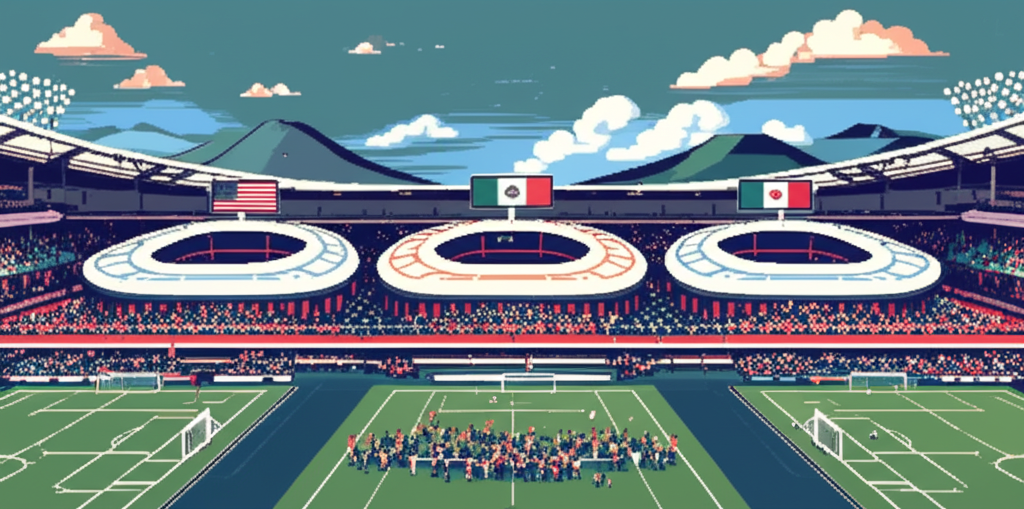
The 2026 FIFA World Cup will be the biggest, most ambitious, and potentially most chaotic tournament in history. Forty-eight teams. Sixteen cities. Three countries. Zero margin for error.
FIFA calls it innovation. Logisticians call it a nightmare.
The Scale Is Unprecedented
Never before has a World Cup been hosted by three separate nations. The United States, Canada, and Mexico will share hosting duties across a geographic footprint that spans two time zones, three currencies, and countless regulatory frameworks.
Teams will fly thousands of miles between group stage matches. Fans will cross international borders just to follow their teams. Broadcast schedules will scramble to accommodate games kicking off at wildly different local times.
It's ambitious. It's bold. And it could go spectacularly wrong.
The Logistical Nightmare
Consider the sheer complexity:
- Travel: A team could play in Vancouver, then fly to Miami, then to Mexico City—all within 10 days
- Visas: Fans need entry permission for up to three countries to follow one team
- Weather: June in Dallas is 100°F. June in Toronto can be 60°F
- Time zones: Kickoff times will range from 12 PM to 9 PM local across the continent
FIFA insists they've planned for everything. But no amount of planning can eliminate jet lag, visa delays, or the chaos of moving 32+ national teams across a continent.
The 48-Team Experiment
This will also be the first 48-team World Cup. Twelve groups of four. More matches. More travel. More everything.
FIFA says it's about inclusion. Critics say it's about money. The truth is probably both.
"Expanding to 48 teams dilutes quality. But it also gives nations who've never qualified a shot at the world stage. Is that worth it? Depends who you ask."
More teams means more matches, which means more revenue. It also means weaker matchups in the group stage and potentially lopsided results that make the tournament feel bloated rather than elite.
The Host Nation Advantage (Times Three)
For the first time ever, three host nations will automatically qualify. The United States, Canada, and Mexico all get a free pass—and a massive home-field advantage.
Mexico opens the tournament at Estadio Azteca, one of the most intimidating venues in world football. The United States gets prime stadium slots across major cities. Canada plays in front of rabid home crowds in Toronto and Vancouver.
This isn't just home advantage. It's continental advantage.
Will It Work?
Honestly? Probably. FIFA has run 21 World Cups. They know what they're doing. The infrastructure in North America is world-class. The stadiums are ready. The logistics, while complex, are manageable.
But there will be chaos. Flights will be delayed. Fans will get stuck at borders. Teams will complain about travel fatigue. Matches will kick off in front of half-empty stadiums because fans couldn't get there in time.
The 2026 World Cup will be a spectacle. It'll also be a mess. And somehow, it'll probably still be incredible.