
Uruguay Reinvented: Bielsa Transforms La Celeste Into High-Pressing Threat
Two-time champions shed defensive identity for attacking football; Giorgian de Arrascaeta emerges as World Cup's potential unsung hero in Group H.
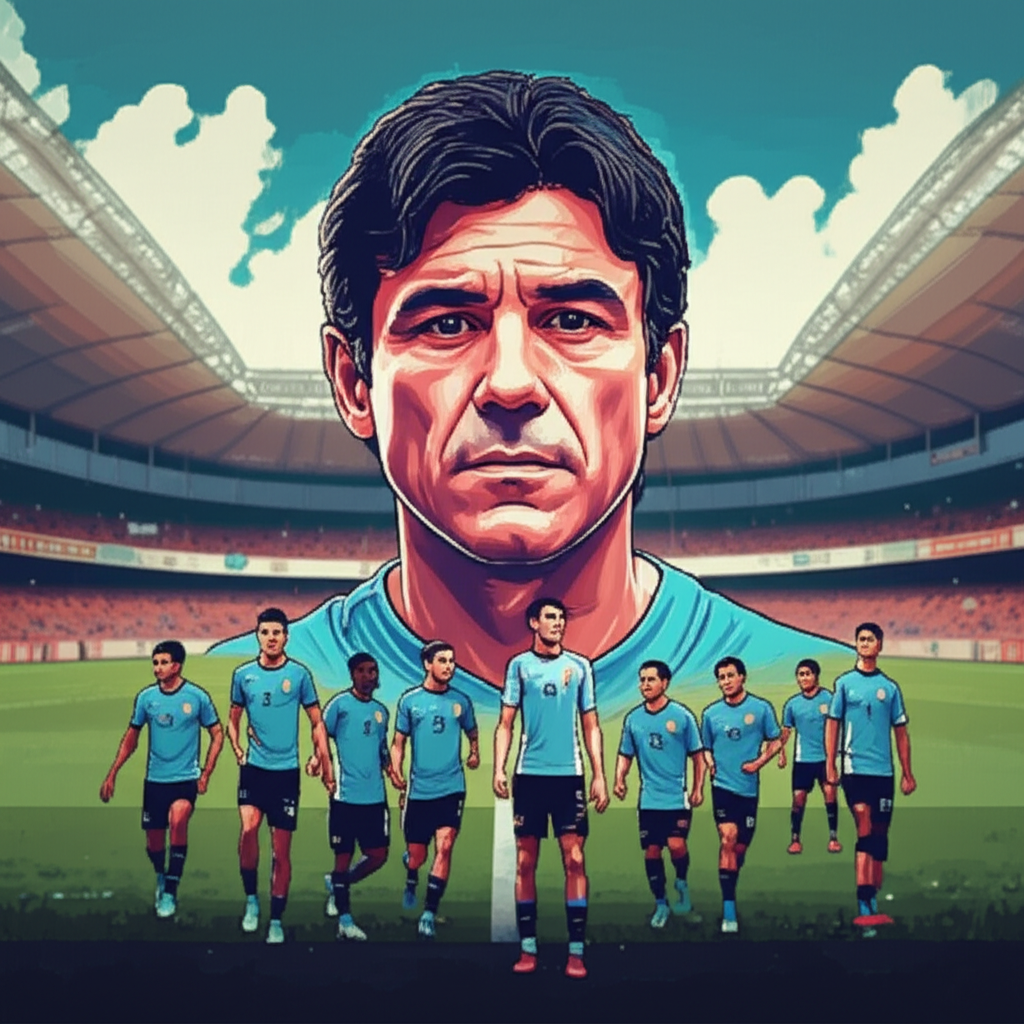
Uruguay arrives at the 2026 World Cup as a nation transformed. The Score reported that "Uruguay, despite its recent struggles, has evolved under Marcelo Bielsa. Once known for its defensive grit, the team now focuses on high pressing and fast transitions." This tactical revolution represents a fundamental shift in identity for a country whose football heritage was built on defensive solidity, physical intimidation, and grinding out results through sheer determination. Under Bielsa—the Argentine tactical obsessive whose demanding methods have revolutionized teams from Athletic Bilbao to Leeds United—Uruguay has shed its conservative skin and embraced an aggressive, possession-oriented style that seeks to dominate opponents rather than outlast them.
The transformation didn't come easily. Bielsa's appointment in 2023 raised eyebrows given his reputation for burning out players with relentless training demands and complex tactical instructions. Wikipedia confirmed he "has been coached by Marcelo Bielsa since 2023," taking over a squad that had underperformed at the 2022 World Cup and needed both tactical modernization and psychological renewal. Bielsa delivered both, implementing the high-intensity pressing system that has become his trademark while instilling a belief that Uruguay could compete with anyone when playing their best football. The results validated his methods—qualification secured through CONMEBOL's brutal format, finishing fourth in the standings despite facing South America's powerhouses repeatedly.
At the heart of Uruguay's new identity stands Giorgian de Arrascaeta, the 31-year-old playmaker whose moment of international recognition has long felt imminent but never quite arrived. Urban Pitch highlighted "Giorgian de Arrascaeta: Uruguay's 2026 World Cup Unsung Hero," noting that "a player whose moment has always felt imminent but never quite arrived." De Arrascaeta operates as the creative fulcrum in Bielsa's system, the player who receives possession in tight spaces and unlocks defenses with precise passing, intelligent movement, and an ability to recognize attacking opportunities before they fully develop. While Luis Suárez and Edinson Cavani defined Uruguay's attack for a generation, de Arrascaeta represents the future—technically refined rather than physically imposing, cerebral rather than instinctive.
Uruguay's draw into Group H presents both opportunity and danger. They face Spain—the reigning European champions and tournament favorites—alongside Saudi Arabia and Cape Verde. Urban Pitch assessed the group as presenting "a manageable path for a nation with Uruguay's pedigree," suggesting that "if Uruguay can fully unite under Bielsa and find greater attacking efficiency, La Celeste becomes a dangerous knockout stage threat." Advancing from this group likely requires defeating both Saudi Arabia and Cape Verde while securing at least a draw against Spain—a challenging but achievable scenario given Uruguay's quality and Bielsa's tactical acumen.
The matches will test whether Bielsa's transformation holds up under World Cup pressure. High-pressing systems demand extraordinary fitness levels and mental discipline—two qualities that can deteriorate rapidly in tournament conditions when teams play multiple matches in short timeframes. If Uruguay's intensity drops even slightly, Spain will exploit the spaces left behind by aggressive pressing. Saudi Arabia and Cape Verde both possess the counter-attacking pace to punish teams that commit too many players forward. Bielsa must balance his attacking principles against the pragmatic reality that World Cup knockout stages are won by teams that defend brilliantly when they don't have the ball.
Miami Today confirmed Uruguay "has qualified for the 2026 FIFA World Cup after last appearing in the tournament in 2022" and will "begin its World Cup campaign against Saudi Arabia in Miami." That opening match carries significant weight—victory builds confidence and puts pressure on Spain, while defeat forces Uruguay into must-win desperation against tougher opponents. Bielsa's teams historically start tournaments strongly, energized by meticulous preparation and clear tactical instructions. Whether they can maintain that level through an entire campaign remains the perennial question about his coaching philosophy.
For de Arrascaeta, this World Cup represents perhaps his final opportunity to step out of the shadows and claim recognition as one of South America's elite playmakers. At 31, he enters his prime years but knows that four years from now—when the next World Cup arrives—age may have diminished the speed and sharpness that make his game effective. Blog sources noted his potential as "Uruguay's key playmaker at the FIFA World Cup 2026 under Marcelo Bielsa," emphasizing how Bielsa's system is specifically designed to maximize de Arrascaeta's strengths while protecting his defensive weaknesses. If Uruguay advances deep into the tournament, it will be because de Arrascaeta orchestrated the attacks that made it possible.
Uruguay carries the weight of two World Cup titles won in 1930 and 1950—a glorious history that feels increasingly distant as decades pass without another triumph. The transformation under Bielsa offers renewed hope that La Celeste can compete with Europe and South America's modern powerhouses. Whether that hope translates into results depends on whether Bielsa's high-risk, high-reward philosophy survives contact with World Cup reality. One thing is certain: Uruguay will not go quietly into the night. They will press, they will attack, and they will force opponents to match their intensity or be overwhelmed by it. In a tournament often decided by caution and defensive discipline, Uruguay's transformed identity makes them one of the most compelling tactical stories heading into the 2026 World Cup.