
Uruguay's Tactical Evolution Under Bielsa: De Arrascaeta Emerges as Key to World Cup Hopes
La Celeste transforms from defensive grit to high-pressing attack under legendary coach; Giorgian de Arrascaeta positioned as playmaker for Group H campaign.
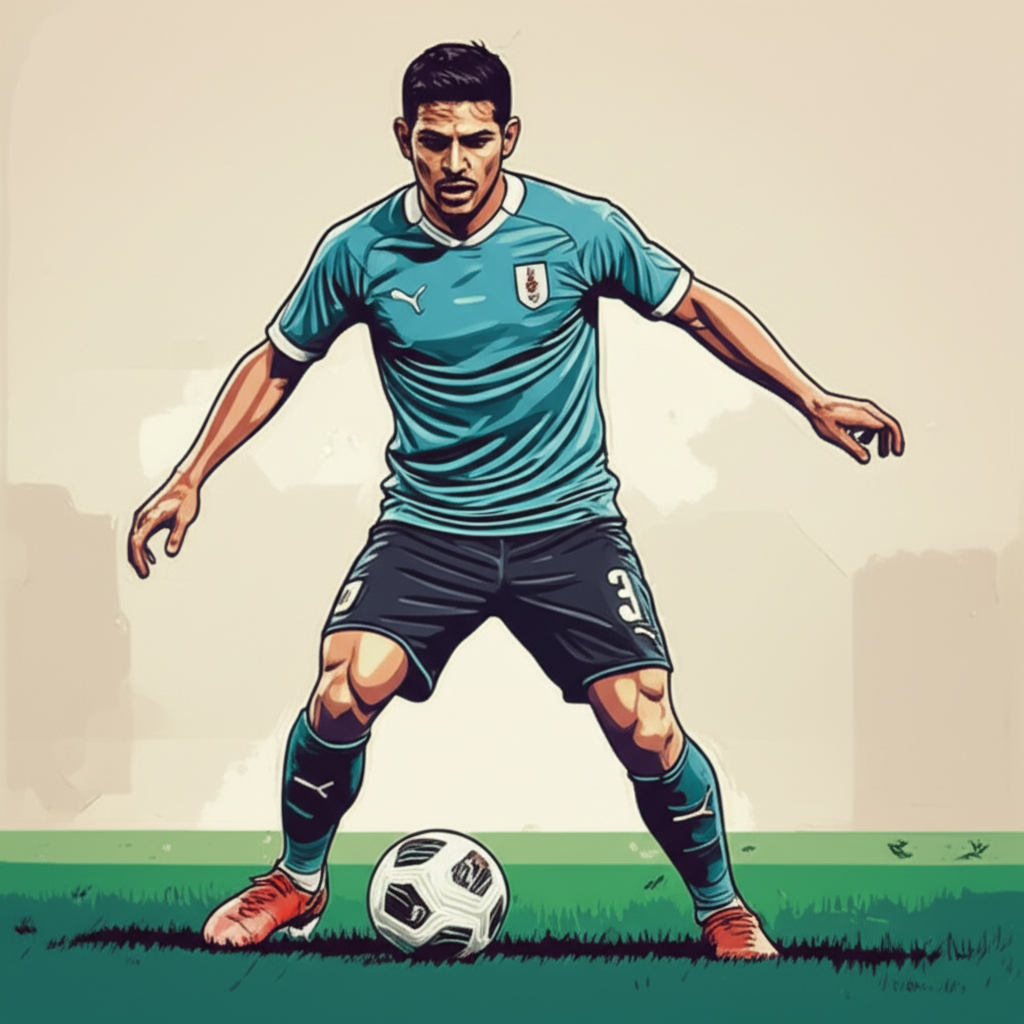
Uruguay arrives at the 2026 World Cup as a nation in transition, having undergone a tactical revolution under the guidance of Marcelo Bielsa. The Score reported that "Uruguay, despite its recent struggles, has evolved under Marcelo Bielsa. Once known for its defensive grit, the team now focuses on high pressing and fast transitions." This transformation represents a fundamental shift in Uruguayan football philosophy—from the conservative, defense-first approach that characterized previous generations to an aggressive, possession-oriented style that demands constant pressure and quick vertical movements. For a nation built on the legendary defensive partnerships of the past, Bielsa's methods represent both risk and opportunity.
The architect of this transformation, Marcelo Bielsa, brings a reputation as one of football's most influential tactical minds. Wikipedia confirmed that Uruguay "have been coached by Marcelo Bielsa since 2023," giving the Argentine mastermind three years to implement his philosophy before the World Cup. Known for his meticulous preparation, demanding training sessions, and unwavering commitment to attacking football regardless of opposition, Bielsa has divided opinion throughout his career. Some view him as a visionary who elevates players beyond their perceived potential; others see a dogmatic idealist whose rigid tactics produce spectacular failures alongside occasional triumphs.
At the heart of Bielsa's Uruguay sits Giorgian de Arrascaeta, a 31-year-old playmaker whose international career has never quite matched his club success. Urban Pitch highlighted de Arrascaeta's potential role: "Giorgian de Arrascaeta: Uruguay's 2026 World Cup Unsung Hero," noting that "a player whose moment has always felt imminent but never quite arrived" could finally break through on football's biggest stage. De Arrascaeta's technical quality has never been questioned—his vision, passing range, and ability to operate in tight spaces make him ideally suited to Bielsa's possession-based approach. What has eluded him is the consistency and big-match impact that transforms talented players into indispensable ones.
Uruguay qualified for the World Cup by finishing fourth in CONMEBOL's brutal qualification process. E-Ticketing confirmed that "Uruguay has qualified for the FIFA World Cup 2026 after finishing fourth in CONMEBOL under Marcelo Bielsa," a respectable achievement given the confederation's depth. South American qualification demands resilience across altitude, hostile crowds, and tactical diversity that European teams rarely encounter. Uruguay's fourth-place finish suggests Bielsa's methods can withstand competitive pressure, though it also indicates they're not yet the finished article that Argentina and Brazil represent.
Uruguay faces a challenging but navigable Group H draw alongside Spain, Saudi Arabia, and Cape Verde. Spain enters as European champions and one of the tournament favorites, possessing technical superiority and tactical sophistication that will test whether Uruguay's high press can function against elite opposition. Saudi Arabia brings the unpredictability that makes them dangerous—recall their stunning victory over Argentina at Qatar 2022. Cape Verde makes their World Cup debut, unburdened by expectation and capable of producing the kind of upset that defines expanded tournaments. Urban Pitch noted that "a group featuring Saudi Arabia, Cape Verde, and Spain presents a manageable path for a nation with Uruguay's pedigree," though managing Spain twice (if they meet again in knockouts) would require perfection.
Miami Today reported that "Uruguay has qualified for the 2026 FIFA World Cup after last appearing in the tournament in 2022. The national team will begin its World Cup campaign against Saudi Arabia in Miami," establishing the opener's stakes. That match against Saudi Arabia provides Uruguay's most critical group stage test beyond Spain—win convincingly and momentum builds; stumble and pressure mounts immediately. Miami's significant Uruguayan diaspora community will provide passionate support, but also intense scrutiny if results disappoint. The opening match sets narratives that become self-fulfilling prophecies in tournament football.
For de Arrascaeta specifically, the World Cup represents potentially his final opportunity to cement international legacy. At 31, he enters the tournament at peak maturity—experienced enough to handle pressure, young enough to maintain the physical intensity Bielsa's system demands. E-Ticketing emphasized his importance: "Giorgian de Arrascaeta could be Uruguay's key playmaker at the FIFA World Cup 2026 under Marcelo Bielsa." If Uruguay is to advance deep into the knockout stages, de Arrascaeta must provide the creative spark that unlocks organized defenses and transitions defense into attack with precision and speed.
Uruguay carries the weight of history into every World Cup—two titles won in 1930 and 1950, a footballing tradition that far exceeds the nation's population of 3.5 million. The expectation isn't merely to participate but to compete for championships, an impossible standard that creates both pride and pressure. Bielsa's tactical revolution challenges that history, asking whether Uruguay can win playing beautiful football rather than grinding out results through defensive discipline and opportunistic counterattacks. The 2026 World Cup will determine whether Bielsa's vision can coexist with Uruguayan expectations or whether La Celeste's identity crisis leads to early elimination and recriminations. For de Arrascaeta, it's a chance to finally become the unsung hero whose name everyone remembers.