
South Korea's Last Dance: Can Son Heung-min Lead the Taeguk Warriors to Glory?
At 34, Son Heung-min's 2026 World Cup could be his final shot at international glory. South Korea is ready to prove they belong among the elite.
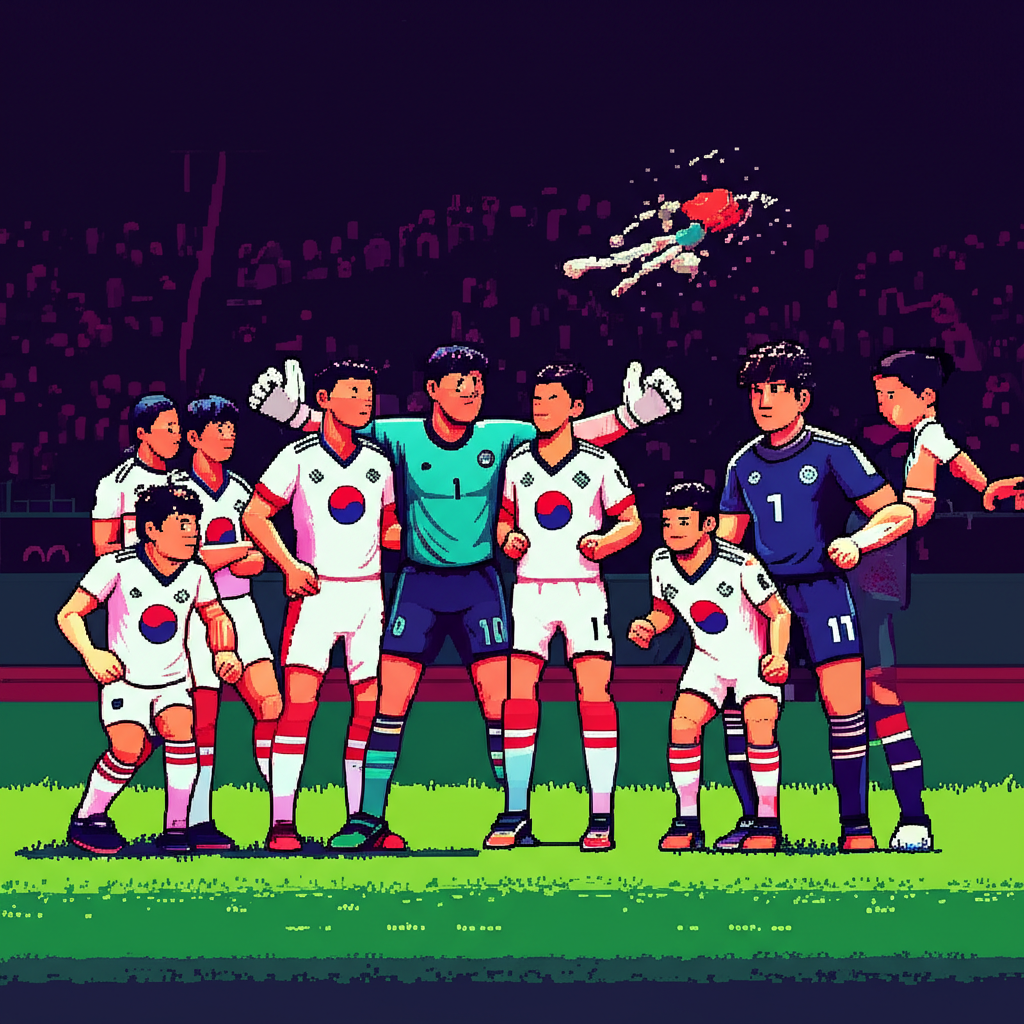
South Korea has quietly become one of Asia's most consistent football powers. With three consecutive World Cup quarterfinal appearances (2002, 2010, 2018), the Taeguk Warriors have proven they belong on the global stage. But 2026 presents their biggest challenge yet: can they break through to the semifinals?
The Son Heung-min Era
Son Heung-min is not just South Korea's best player—he is their entire offensive identity. The Tottenham star has carried his nation on his back for years, combining blistering pace, clinical finishing, and tireless work ethic. At 34 years old in 2026, this World Cup may represent his final chance at international glory.
The question is simple: can South Korea win without Son? History suggests no. When he is injured or neutralized, the team struggles to create chances. Building a supporting cast around their captain will be crucial. Players like Lee Kang-in (Paris Saint-Germain) and Hwang Hee-chan (Wolves) must step up and share the goal-scoring burden.
Tactical Discipline and Team Unity
South Korea thrives on organization and relentless pressing. They may not have the individual brilliance of European giants, but they make up for it with collective effort and tactical discipline. Opponents often underestimate them—and pay the price.
The team's strength lies in their ability to execute a game plan with precision. Whether defending deep and counter-attacking or pressing high to force mistakes, South Korea adapts to opponents. Their success depends on every player fulfilling their role without ego or hesitation.
The Military Service Question
South Korean footballers face a unique challenge: mandatory military service. Players who fail to win a major international tournament (Olympic medal or Asian Cup) must serve 21 months. This creates immense pressure and has influenced career trajectories for decades.
Son earned his exemption by winning gold at the 2018 Asian Games, but many current squad members still face this burden. The psychological weight of knowing that failure could derail their careers adds another layer of pressure to an already difficult tournament.
Historical Context and Expectations
South Korea's run to the semifinals in 2002 (as co-hosts) remains the benchmark. That magical summer saw them defeat Italy and Spain, igniting a nation and proving Asian football could compete with the world's best. But controversy and accusations of biased officiating have tainted that achievement.
In 2026, South Korea wants to prove it was no fluke. They want to reach the semifinals again—this time, legitimately and undeniably. The hunger is real, and the motivation is clear.
The Path Forward
South Korea must navigate the group stage with efficiency. They cannot afford to waste energy against weaker opponents. Every point matters, and finishing in the top two is non-negotiable.
If they reach the knockout rounds, their combination of tactical intelligence, fitness, and mental toughness makes them dangerous. Teams that overlook them do so at their peril. South Korea thrives as underdogs—it is where they are most dangerous.
Can They Do It?
Breaking into the World Cup semifinals would cement South Korea as one of football's elite nations. It would validate decades of development, investment, and hard work. And for Son Heung-min, it would be the perfect send-off to an illustrious international career.
The 2026 World Cup represents more than just a tournament for South Korea. It is a chance to rewrite history, to prove doubters wrong, and to show the world that Asian football has arrived. The stage is set. The Taeguk Warriors are ready.