
Morocco in Crisis as Regragui Quits 100 Days Before World Cup
Historic coach who led Atlas Lions to 2022 semifinals steps down citing burnout; youth team coach Mohamed Ouahbi promoted as emergency replacement.
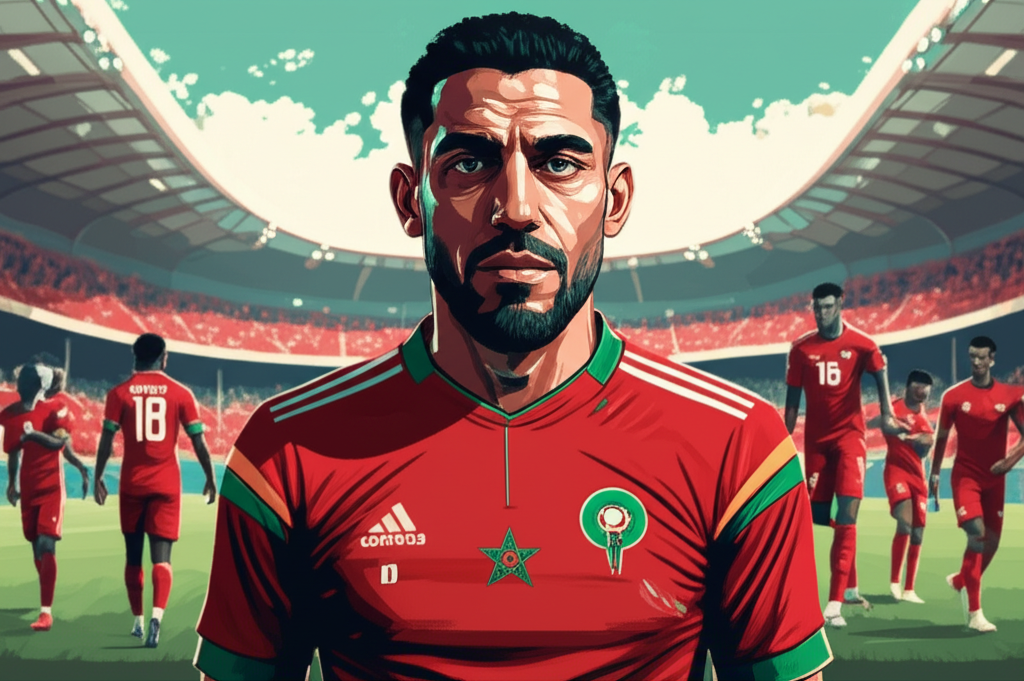
Morocco's preparations for the 2026 World Cup were thrown into chaos on Thursday when head coach Walid Regragui resigned from his position, citing exhaustion after four years in charge of the Atlas Lions. The National reported that "Morocco's 2026 World Cup plans were thrown into disarray on Thursday after head coach Walid Regragui quit his post," leaving the African powerhouse searching for leadership with less than 100 days before their tournament opener. The departure stuns African football—Regragui led Morocco to a historic World Cup semifinal appearance in 2022, becoming the first African nation to reach that stage, and now walks away at the moment when expectations for the Atlas Lions have never been higher.
FOX Sports confirmed the shocking development: "The Moroccan Football Federation has confirmed the departure of Regragui less than 100 days before the 2022 World Cup semi-finalists kick off their campaign in North America." The timing raises profound questions about what prompted Regragui's decision at such a critical moment. After guiding Morocco through qualification and establishing them as genuine World Cup contenders, stepping down mere months before the tournament suggests either deep-seated frustrations with the federation or genuine physical and mental exhaustion that made continuing untenable.
Regragui himself addressed the reasons for his departure in remarkably candid terms. Morocco World News reported his statement that the team needed "a new breath" before the World Cup, acknowledging that four years of intense pressure had taken their toll. The coach who became a national hero in Qatar now recognized that remaining in position could harm rather than help Morocco's chances. His willingness to step aside for the team's benefit reflects both his commitment to Moroccan football and an understanding that coaching burnout at major tournaments can devastate even the most talented squads.
The Moroccan Football Federation moved quickly to fill the void, promoting Mohamed Ouahbi from his position as youth team coach to take charge of the senior national team. Morocco World News confirmed that "Walid Regragui has officially stepped down as Morocco's head coach, with Mohamed Ouahbi set to replace him." The decision to promote from within rather than seeking an established international coach suggests the federation values continuity and familiarity with the existing squad over starting fresh with an outsider. Ouahbi knows many of Morocco's current players from their youth international careers and understands the tactical foundations Regragui established.
Yet promoting a youth coach to manage a World Cup campaign in less than 100 days represents an enormous gamble. Ouahbi has never managed at senior international level, never navigated the pressure of a major tournament, and will have minimal time to implement his ideas before competitive matches begin. Morocco's players—accustomed to Regragui's leadership style and tactical approach—must now adapt to new methods under intense scrutiny. The World Cup allows no grace period for transition; results come immediately or not at all.
Morocco enters the tournament as Africa's highest-ranked team and one of the favorites to advance deep into the knockout stages. Wikipedia noted that "as of 19 January 2026, Morocco is ranked 8th in the world, the highest ranking by an African team since Nigeria in 1994." That ranking reflects both Morocco's 2022 semifinal run and consistent strong performances since. Spain's coach Luis de la Fuente recently praised the Atlas Lions, with Morocco World News reporting that he "believes Morocco could be one of the standout teams at the upcoming 2026 FIFA World Cup." Those expectations now rest on Ouahbi's inexperienced shoulders.
Morocco will face Brazil, Scotland, and Haiti in Group C—a challenging but navigable draw that offers clear advancement opportunities. Brazil arrives as perennial favorites despite recent struggles, Scotland returns to the World Cup after decades of absence, and Haiti makes a long-awaited comeback. Morocco should compete for first place in this group, but doing so requires organizational stability and tactical clarity that sudden coaching changes rarely provide. Ouahbi must quickly establish authority, maintain player buy-in, and implement adjustments without disrupting what already works.
The coaching crisis compounds other organizational challenges facing Moroccan football. BBC Sport reported that "Wafcon 2026 postponed just 12 days before kick-off in Morocco," noting hosting uncertainties around the Women's Africa Cup of Nations that was scheduled for March. The Washington Post highlighted "doubts over Morocco's willingness to host" following "chaotic scenes that played out in the 2025 men's Afcon final, which Morocco lost 1-0 to Senegal." These organizational struggles suggest deeper issues within Moroccan football infrastructure that extend beyond Regragui's departure.
For Morocco, the next 100 days will determine whether Ouahbi can maintain the momentum Regragui built or whether the coaching change derails their World Cup ambitions entirely. The Atlas Lions possess the talent to succeed—a blend of European-based stars and domestic league stalwarts who have proven they can compete with anyone. Whether they can channel that talent under new leadership in the tournament's pressure cooker remains the defining question of Morocco's 2026 campaign. Regragui's legacy as the coach who took Morocco to unimaginable heights is secure; whether Ouahbi can build on that foundation or see it crumble will be determined on North American pitches this June.