
Japan Arrives as Genuine Threat: Samurai Blue's Giant-Killing Reputation Meets Group F Challenge
No longer a developing nation, Japan enters World Cup 2026 with proven ability to upset elite opponents; Group F clash with Netherlands and Tunisia awaits.
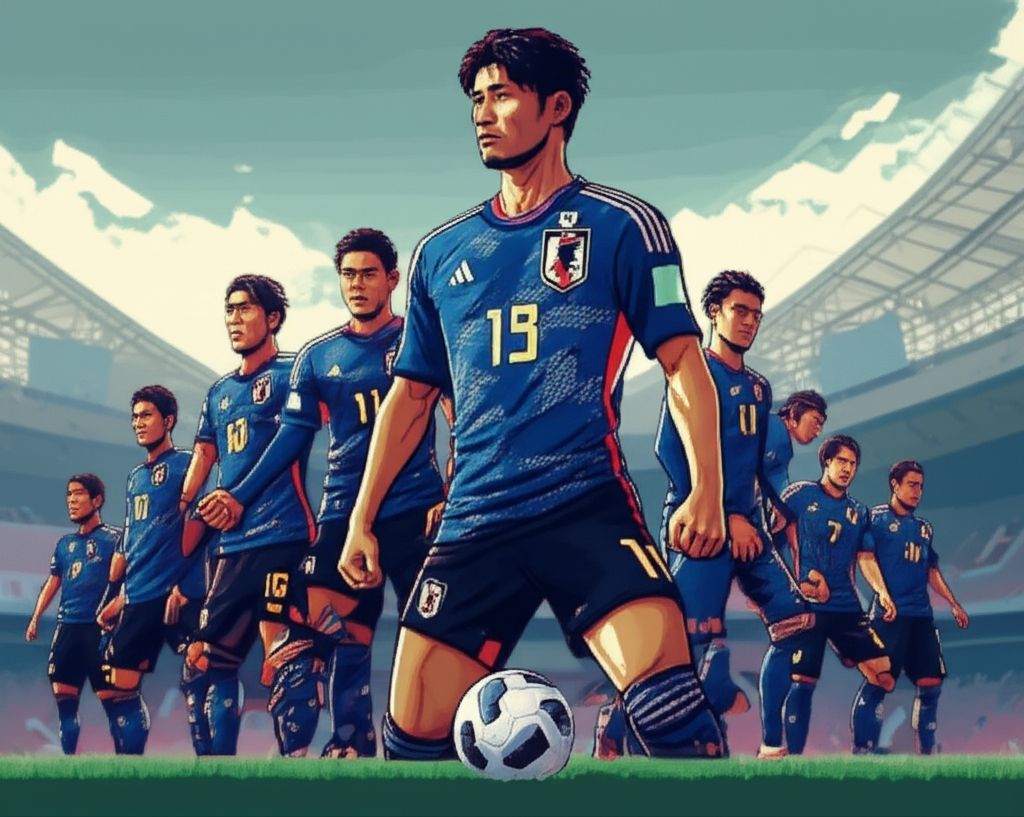
Japan enters the 2026 FIFA World Cup with a transformed reputation that reflects years of strategic development and recent tournament success. Sofascore emphasized this evolution: "Japan arrives at the 2026 FIFA World Cup no longer as a 'developing' football nation, but as a genuine global threat with a reputation for giant-killing." The transformation from plucky underdogs to legitimate contenders represents one of Asian football's greatest success stories—built on youth development infrastructure, European club integration, and a tactical sophistication that allows the Samurai Blue to compete with anyone when executing their game plan perfectly.
That giant-killing reputation was forged at Qatar 2022, where Japan produced two of the tournament's most stunning results. Defeating both Germany and Spain in the group stage—victories that eliminated the former and nearly eliminated the latter—announced Japan as a team capable of beating elite European opposition through tactical discipline, explosive transitions, and unwavering belief. Those victories weren't flukes born of German complacency or Spanish arrogance; they were earned through superior execution in critical moments and Japan's ability to punish opponents who underestimated their technical quality and organizational strength.
World Football Index confirmed Japan's current momentum: "The Blue Samurai are in strong form, having won their last three matches of 2025." That winning streak extends a longer pattern of consistency that has characterized Japanese football over the past four years. Unlike teams whose form fluctuates wildly between friendlies and competitive matches, Japan maintains standards regardless of opposition or stakes. This reliability stems from a professional culture that pervades both the national team and domestic J-League—a commitment to preparation, tactical flexibility, and collective responsibility that European clubs have learned to value when signing Japanese players.
Japan will face Netherlands and Tunisia in Group F, a draw that presents both opportunity and danger. The Netherlands represents European football's technical aristocracy—a nation that has produced total football philosophy and reached three World Cup finals without ever winning the ultimate prize. Oranje's possession-based approach will test whether Japan can maintain defensive organization for 90 minutes against opponents who probe relentlessly for weaknesses. Tunisia brings North African football's physicality and tactical pragmatism, creating a completely different challenge that requires Japan to break down opponents who sit deep and counter when opportunities arise.
The group's composition favors Japan's strategic strengths. World Football Index noted that Japan has demonstrated capabilities "over the last four years" that make them legitimate contenders to win Group F. Finishing first would avoid potential knockout stage matchups against Group E's winner (likely Germany) and provide a theoretically easier path through the Round of 16. Finishing second could mean facing Brazil or another South American powerhouse—a winnable match but one that demands near-perfection. Japan's group stage performance will largely determine how deep their tournament run extends.
Off the field, Japan's commercial partnerships reflect their rising global profile. Goal.com reported on World Cup 2026 kit releases, noting that "the classic blue of the Japanese home jersey is brought to life using an abstract graphic with ash blue linear details, reflecting the famed haze found on the horizon where sky and sea meet in Japan." The attention to aesthetic detail in kit design mirrors the broader Japanese approach to football—everything must be intentional, nothing left to chance. Footy Headlines confirmed that "the Adidas Japan 2026 away jersey will be available from Friday, 20 March 2026," with the predominantly off-white design featuring black and multicolor detailing that honors traditional Japanese design principles.
Japan's squad blends European-based stars with J-League stalwarts, creating tactical flexibility that few Asian teams can match. Players competing in the Premier League, Bundesliga, Serie A, and La Liga bring exposure to elite tactical systems and big-match pressure that translates directly to World Cup performance. Simultaneously, domestic league players provide cohesion and understanding of Japanese football identity that prevents the national team from becoming merely a collection of individuals. This balance between international experience and domestic continuity gives Japan advantages that purely Europe-based squads sometimes lack.
The Samurai Blue's tactical approach under their current management emphasizes what worked at Qatar 2022—compact defensive organization that transitions explosively into attack when possession is won. Japan doesn't try to out-possess Spain or out-physical Germany; instead, they execute their game plan with precision and punish opponents during transition moments when defensive structures are vulnerable. This pragmatic approach maximizes Japan's strengths (speed, technical quality, tactical discipline) while minimizing exposure to weaknesses (physical dominance in aerial duels, sustained pressure against deep blocks).
For Japan, the 2026 World Cup represents an opportunity to build on Qatar's success and establish themselves as a permanent fixture among football's elite. Reaching the quarterfinals would match their best-ever World Cup performance (achieved as co-hosts in 2002); advancing to the semifinals would represent uncharted territory that confirms Japan as Asia's undisputed power. The path is difficult—Group F opponents won't be intimidated by Japan's reputation, and knockout stage matchups only get harder—but the Samurai Blue have proven they belong in these conversations. Whether they can translate belonging into achieving remains the question that will define their 2026 campaign.