
Japan No Longer Underdogs: Samurai Blue Arrive as Genuine Global Threat
Strong form and giant-killing reputation make Japan dangerous opponents in Group F alongside Netherlands and Tunisia; 2026 could mark breakthrough tournament for Asian powerhouse.
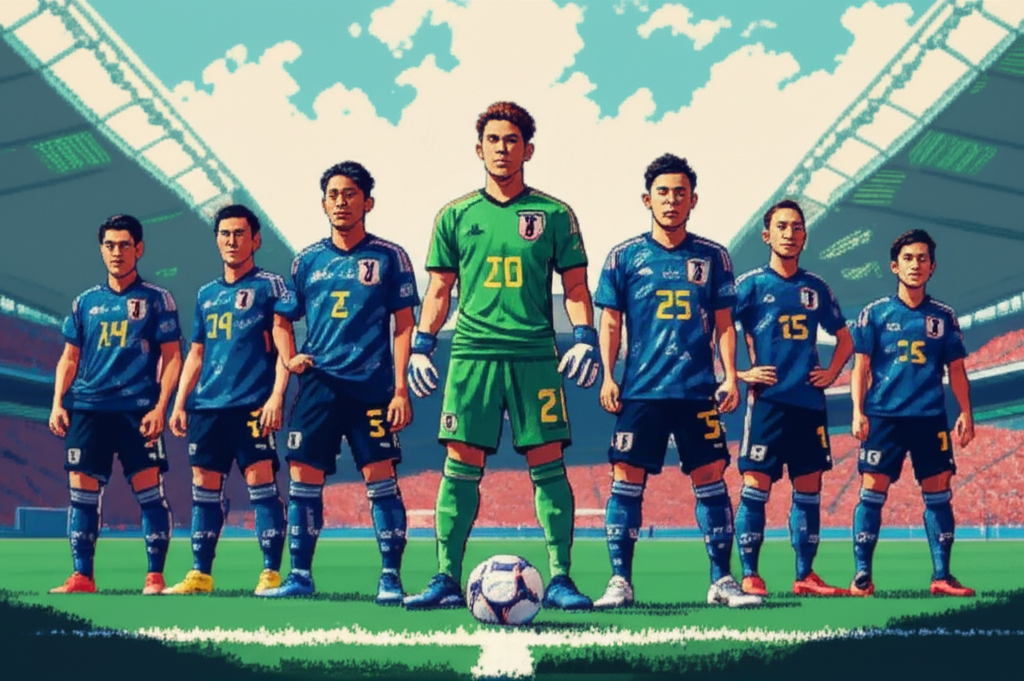
Japan arrives at the 2026 FIFA World Cup carrying a reputation that would have seemed impossible a generation ago. Sofascore reported that "Japan arrives at the 2026 FIFA World Cup no longer as a 'developing' football nation, but as a genuine global threat with a reputation for giant-killing." This transformation from plucky underdogs to legitimate contenders reflects decades of investment in youth development, tactical sophistication, and a playing style that has evolved from reactive defense to proactive possession football. The Samurai Blue—as Japan's national team is known—enters the tournament not hoping to compete but expecting to advance, a psychological shift that carries profound implications for how they'll approach their Group F matches.
The foundation for this confidence comes from recent results. World Football Index emphasized that "the Blue Samurai are in strong form, having won their last three matches of 2025," noting that "their capabilities have been on display for a much longer period—over the last four years." This sustained excellence isn't built on individual brilliance but on collective organization, tactical discipline, and an ability to execute game plans with precision even against superior opponents. Japan's greatest strength lies not in possessing world-class stars but in functioning as a cohesive unit where every player understands their role and executes it relentlessly. This team-first mentality makes them extraordinarily difficult to break down and dangerous on the counter-attack when opponents commit forward.
Japan's reputation as giant-killers was cemented at the 2022 World Cup in Qatar, where they defeated both Germany and Spain in the group stage—two European powerhouses that Japan theoretically had no business beating. Those victories weren't flukes but the product of meticulous preparation, tactical adaptability, and mental resilience under pressure. The Samurai Blue have proven they can compete with anyone on their best day, which makes them a nightmare draw for traditional football powers accustomed to dominating Asian opposition. As Sofascore noted, Japan is now recognized not as a developing nation but as a "genuine global threat"—words that would have been unthinkable when Japan first qualified for the World Cup in 1998.
Group F presents Japan with both opportunity and challenge. They face Netherlands—a perennial European power currently ranked among the world's top teams—and Tunisia, a tough North African side that qualified through Africa's competitive process. Japan enters as neither favorite nor underdog, occupying the middle ground where tournaments are often won by teams that peak at the right moment. Advancing from this group likely requires defeating Tunisia and securing at least a draw against Netherlands, a scenario well within Japan's capabilities given their recent form and tactical sophistication. The Netherlands will not take Japan lightly after watching them dismantle Germany and Spain in Qatar.
Japan's playing style has evolved significantly in recent years. Where previous generations relied on defensive organization and hoping to nick goals on counter-attacks, the current Samurai Blue builds attacks patiently from the back, maintains possession intelligently, and presses high when opportunities arise. This tactical maturity reflects both coaching improvements and the fact that many Japanese players now compete in Europe's top leagues, bringing back experiences and tactical knowledge that elevate the entire national team. The J-League's continued development provides a strong domestic base, but it's the European-based contingent—players at Liverpool, Brighton, Monaco, and other major clubs—that gives Japan the elite edge needed to compete at World Cups.
Off the field, Japan's preparations have been meticulous. Footy Headlines reported that "the Adidas Japan 2026 away jersey will be available from Friday, 20 March 2026," with Goal.com noting the design features "an abstract graphic with ash blue linear details, reflecting the famed haze found on the horizon where sky and sea meet in Japan." These details matter not for aesthetic reasons but because they reflect the broader professionalism and attention to detail that characterizes Japanese football. Everything from kit design to training facilities to nutritional planning receives the same obsessive focus that defines Japan's approach to football excellence.
The question facing Japan is whether they can translate group stage success into deep tournament runs. Despite decades of World Cup participation and several impressive group stage performances, Japan has never advanced beyond the Round of 16. Breaking through that barrier requires not just talent and tactics but mental fortitude to handle knockout pressure and perhaps a bit of luck with draws and referee decisions. World Football Index's assessment that Japan could be among the tournament's "dark horses" reflects both their capabilities and the uncertainty about whether they can finally achieve the breakthrough that has eluded them for so long.
For Japanese football, the 2026 World Cup represents an opportunity to cement their status among the global elite. Britannica confirmed Japan's qualification through the Asian Football Confederation alongside other Asian qualifiers including Iran, South Korea, and Saudi Arabia. Yet Japan enters as Asia's strongest representative, the team most likely to challenge Europe and South America's traditional dominance. Whether they can deliver on that expectation depends on countless variables—player fitness, tactical execution, officiating decisions, and the intangible momentum that carries teams through tournaments.
What's certain is that no opponent will underestimate Japan. The Samurai Blue have earned respect through performances that proved their quality wasn't circumstantial but fundamental. They arrive at the 2026 World Cup not as underdogs hoping for upsets but as a legitimate threat capable of beating anyone when their game clicks into place. In a tournament defined by upsets and surprises, Japan's transformation from developing nation to global threat may be one of the most significant storylines—particularly if they can finally break through to the quarterfinals and announce their arrival among football's true elite. The days of dismissing Asian football are over. Japan's presence at this World Cup ensures that lesson will be reinforced emphatically.