
Sébastien Haller Returns to Ivory Coast Squad After Injury Absence; Elephants Eye Group E Advancement
Borussia Dortmund striker makes long-awaited national team comeback; attacking firepower of Haller, Adingra, Diallo targets Germany upset in competitive group.
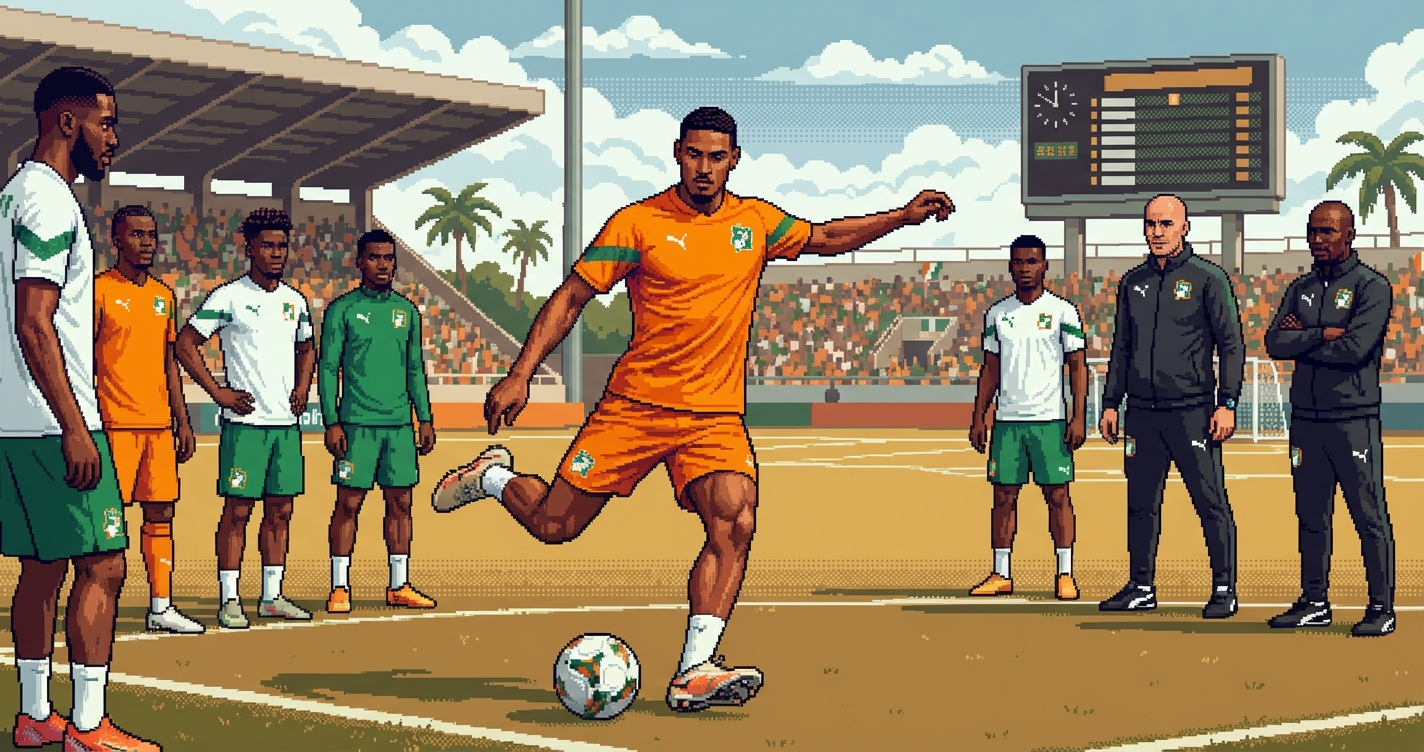
Ivory Coast's World Cup preparations received a significant boost with the return of Sébastien Haller to the national team squad following an extended absence due to injury and fitness concerns. Foot Africa reported in March 2025: "Sebastien Haller who had been absent due to injuries and fitness concerns makes his long awaited return to the national team. The Borussia Dortmund striker currently on loan at FC Utrecht, bolsters the attacking line as the Elephants seek to" advance from a competitive Group E featuring Germany, Ecuador, and Curaçao. Haller's comeback provides head coach Emerse Fae with attacking firepower that complements the Elephants' existing Premier League talent.
The squad features attacking depth that extends well beyond Haller's presence. FourFourTwo documented Ivory Coast's Premier League contingent: "Their squad features some real attacking firepower, with Amad Diallo, Simon Adingra, Nicolas Pepe and Simon Haller all being known to Premier League audiences." This concentration of English top-flight talent creates tactical flexibility—Fae can deploy direct wingers like Adingra, creative playmakers like Diallo, or experienced finishers like Pepe depending on opposition and match situations. The attacking variety represents evolution from previous Ivorian squads built around individual superstars rather than collective quality across multiple positions.
Ivory Coast qualified for the 2026 World Cup through dominant CAF qualifying that demonstrated both offensive potency and defensive organization. Fox Sports summarized the campaign: "The squad won key home matches at the Stade Félix Houphouët-Boigny and picked up crucial points on the road, allowing the squad to clinch the group by one point over Gabon." That narrow margin over Gabon reflected the competitive nature of African qualifying, where home advantage matters enormously and road points determine qualification. Ivory Coast navigated these challenges through tactical discipline that allowed them to grind out results when attacking brilliance alone proved insufficient.
Group E presents a formidable challenge that will test whether Ivory Coast's attacking talent can overcome European and South American opposition. Germany enters as four-time champions rebuilding after disappointing recent tournaments, possessing technical quality and tactical sophistication that has historically overwhelmed African teams despite the Elephants' individual talent. Ecuador brings South American football's physicality and technical skill developed through CONMEBOL's brutal qualifying pathway. Curaçao, making their World Cup debut, represents the unknown—a team unburdened by expectation that could produce upsets if underestimated.
Haller's return specifically addresses Ivory Coast's need for a proven goal scorer who can convert chances against elite opposition. His experience at Ajax, Borussia Dortmund, and through European competitions provides the big-match temperament that separates tournament performers from players who excel only in qualification. The loan spell at FC Utrecht may have kept him match-fit, but World Cup football demands more—the ability to execute under pressure when defensive errors are rare and scoring opportunities arrive infrequently. Whether Haller possesses that sharpness after injury layoff remains uncertain until he performs on the tournament stage.
Ivory Coast's recent tournament history creates both expectation and caution. The Drogba generation established the Elephants as African powerhouses capable of competing with anyone, yet also demonstrated how talent alone doesn't guarantee advancement when tactical preparation and mental resilience falter. This current squad lacks a single dominant figure like Drogba but compensates with depth and balance that previous Ivorian teams lacked. Fae's challenge lies in forging these Premier League individuals into a cohesive unit capable of executing game plans against Germany's organization and Ecuador's intensity.
For Ivory Coast, the 2026 World Cup represents an opportunity to advance beyond the group stage—an achievement that has eluded them despite reaching three consecutive tournaments from 2006-2014. Haller's return provides the attacking centerpiece around which Fae can build tactical approaches, whether deploying him as a target man for direct play or utilizing his movement to create space for wide attackers like Adingra and Diallo. The Elephants enter Group E as neither clear favorites nor obvious underdogs, positioned instead as the type of talented African side that advances through tactical execution and individual quality rather than reputation alone. Whether that potential translates into knockout stage football depends entirely on performances across three group matches where Ivory Coast must prove their attacking firepower overwhelms the defensive discipline that Germany and Ecuador will inevitably deploy.