
Iran's World Cup Participation in Doubt as FIFA Pledges 'Everybody Participating'
Iranian Football Federation president calls participation 'unlikely' following US military action, creating crisis for tournament organizers.
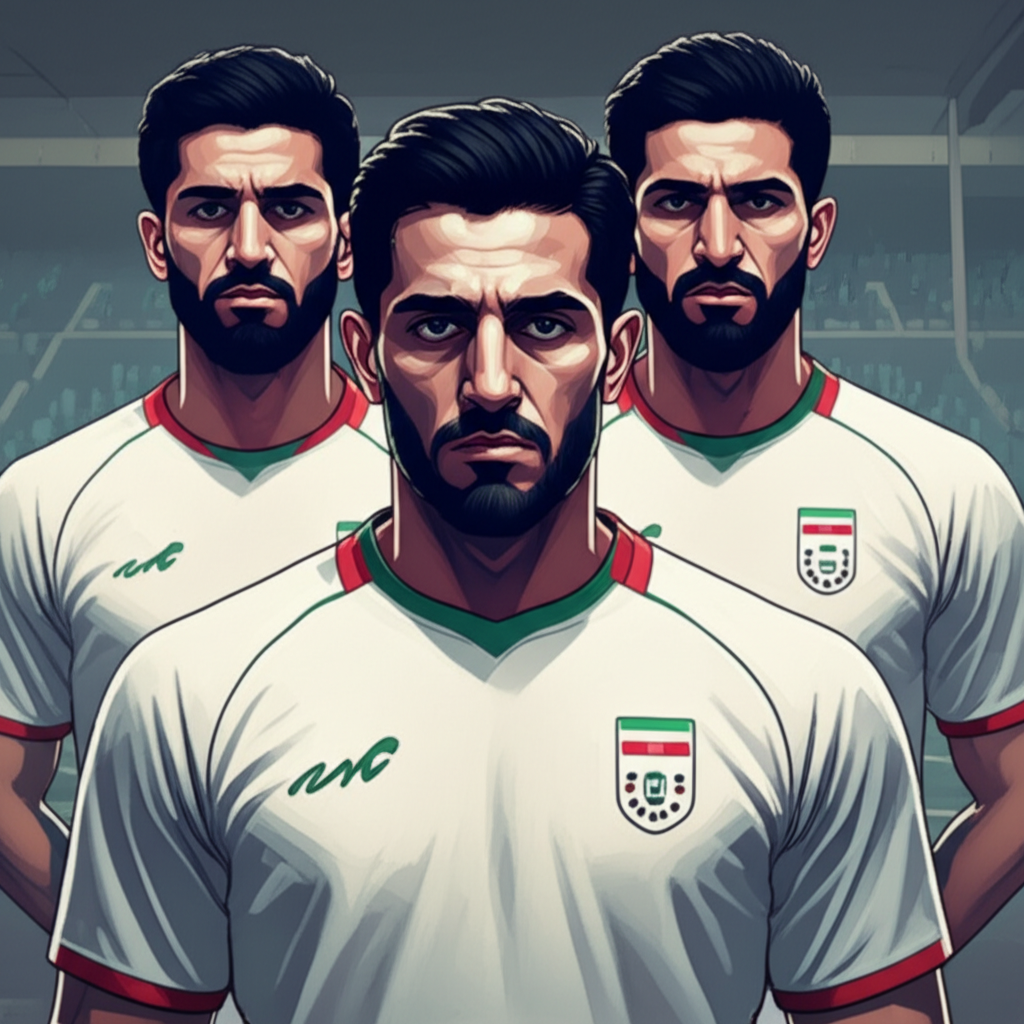
With just over three months until the World Cup kicks off, FIFA faces an unprecedented crisis as Iran—one of 48 qualified nations—threatens to withdraw from the tournament following escalating geopolitical tensions with host nation United States. The Iranian Football Federation has indicated participation is now "unlikely," creating organizational chaos for a competition that has already printed schedules, sold tickets, and finalized venue arrangements.
Mehdi Taj, president of the Iranian Football Federation, confirmed the dire situation facing Team Melli. The statement comes in the wake of recent US military action against Iran, fundamentally altering the landscape for a team that earned qualification through the Asian Football Confederation and is currently assigned to Group G alongside Belgium, New Zealand, and Egypt.
"FIFA secretary general Mattias Grafstrom said his organization is focused on all teams participating at the 2026 World Cup," USA Today reported, reflecting FIFA's public stance emphasizing tournament integrity despite the developing crisis. The organization's measured response suggests behind-the-scenes diplomatic efforts to preserve Iran's involvement, though concrete details remain scarce.
Iran qualified for the World Cup finals through AFC competition, finishing atop Group A in the qualification process and securing their fourth consecutive World Cup appearance. Under the current schedule, Iran is set to open their Group G campaign against New Zealand on June 15 in Los Angeles, face Belgium on June 21 in the same city, and close group play against Egypt on June 26 in Seattle. All three matches are scheduled on US soil, the central complication in Iran's participation dilemma.
This marks the second major diplomatic incident affecting Iran's World Cup preparations. In December 2025, Iran boycotted the official World Cup draw ceremony after the United States denied visas to senior federation officials, forcing the nation to be represented by proxy during the televised event. That earlier visa denial now appears prophetic, foreshadowing deeper complications that threaten Iran's tournament participation entirely.
The potential withdrawal creates significant sporting and logistical consequences. Group G's competitive balance would be fundamentally altered, with Belgium, New Zealand, and Egypt suddenly facing a three-team group instead of the planned four. FIFA would need to determine whether to replace Iran with another nation—potentially requiring emergency playoff matches—or proceed with an unbalanced group structure that could advantage teams facing fewer matches.
Iran's domestic football league has reportedly suspended operations amid the escalating crisis, compounding concerns about the national team's readiness even if diplomatic solutions emerge. The Iranian federation had previously scheduled a closed-door friendly against Puerto Rico during a planned US training camp, preparations now thrown into uncertainty as the political situation deteriorates. For FIFA, the governing body that has long positioned football as above politics, Iran's potential absence represents a fundamental challenge to that principle. With ticket holders already planning trips to watch Iran play in Los Angeles and Seattle, and broadcast schedules locked in across global markets, the tournament organizers face a race against time to resolve a crisis that threatens the sporting integrity of the world's biggest football event.