
Germany's Redemption Arc: Why 2026 Could End The Drought
Two consecutive group stage exits. A generation of talent waiting to prove itself. The four-time champions are hungry again.
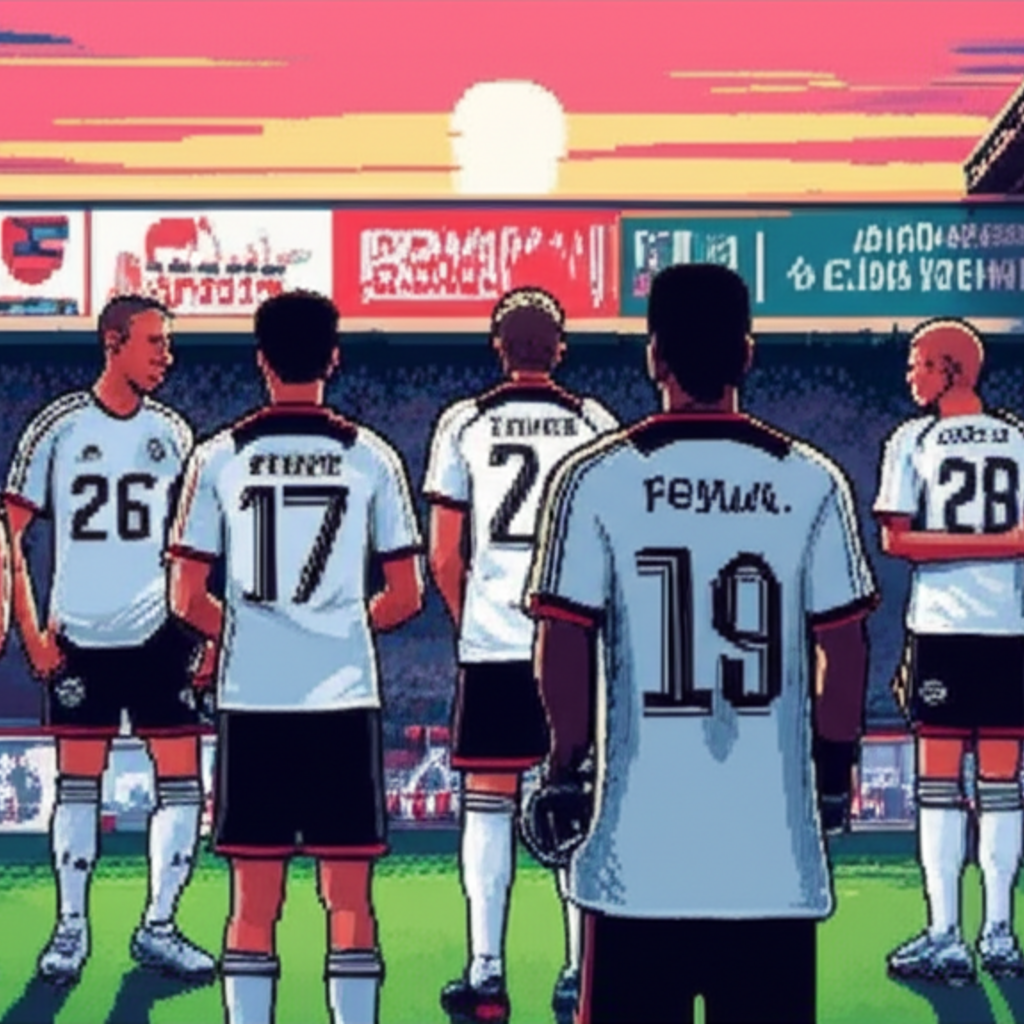
Two World Cups. Two group stage exits. For a nation that has won the tournament four times, the last eight years have been nothing short of humiliating.
Germany's failure to advance past the group stage in Russia 2018 was shocking. Doing it again in Qatar 2022 was a crisis. Now, as 2026 approaches, the question isn't whether Germany can bounce back—it's whether they have the mentality to do it.
The Weight of Expectation
Germany doesn't rebuild. They reload. That's the expectation. But the reality since lifting the trophy in Brazil 2014 has been far messier:
- 2018: Defending champions crash out in the group stage. South Korea. Mexico. Disaster.
- 2022: Dominant performances against Spain and Costa Rica mean nothing when you lose to Japan and finish third in the group.
This isn't a talent problem. Germany has world-class players across the pitch. This is a psychological problem. The weight of being Germany—the expectation that they will simply show up and win—has become a curse.
The New Generation
The core that won in 2014 is gone. What remains is a squad that has known only failure at World Cups:
- Jamal Musiala — The Bayern maestro who can unlock any defense
- Florian Wirtz — Creative brilliance, the kind that can decide knockout games
- Kai Havertz — Proven at the highest level, a big-game player
- Joshua Kimmich — The engine, the leader, the heartbeat
This generation has something to prove. They weren't part of 2014. They've only experienced the shame of group stage exits. That hunger—that desperation to restore Germany's place—could be exactly what this team needs.
"We don't talk about 2014 anymore. That's history. This team has to write its own story."
— Julian Nagelsmann
Tactical Evolution
Under Nagelsmann, Germany has shifted from rigid systems to fluid, adaptive football. High press. Quick transitions. Technical superiority paired with relentless intensity.
The blueprint is clear: dominate possession, press aggressively, and finish clinical in the final third. When it works, Germany looks unstoppable. When it doesn't, they look vulnerable to counter-attacks—exactly how Japan beat them in 2022.
Why 2026 Is Different
This squad is peaking at the right time. Musiala will be 23. Wirtz will be 23. Havertz will be 26. Kimmich will be 31—still at his prime as a leader.
More importantly, this team has learned from failure. They know what it feels like to go home early. They've experienced the national disappointment, the media scrutiny, the shame.
If Germany can solve their mentality issue—if they can play with the freedom and confidence that defined their 2014 campaign—there's no reason they can't go deep. The talent is there. The tactics are there. The hunger is there.
The only question is whether they believe it themselves.