
Jamal Musiala Recovers from Club World Cup Injury: Germany's Star Playmaker Ready for World Cup Alongside Florian Wirtz
Bayern Munich midfielder overcomes broken leg setback; Julian Nagelsmann's attacking blueprint features Musiala-Wirtz tandem as Germany targets fifth World Cup title.
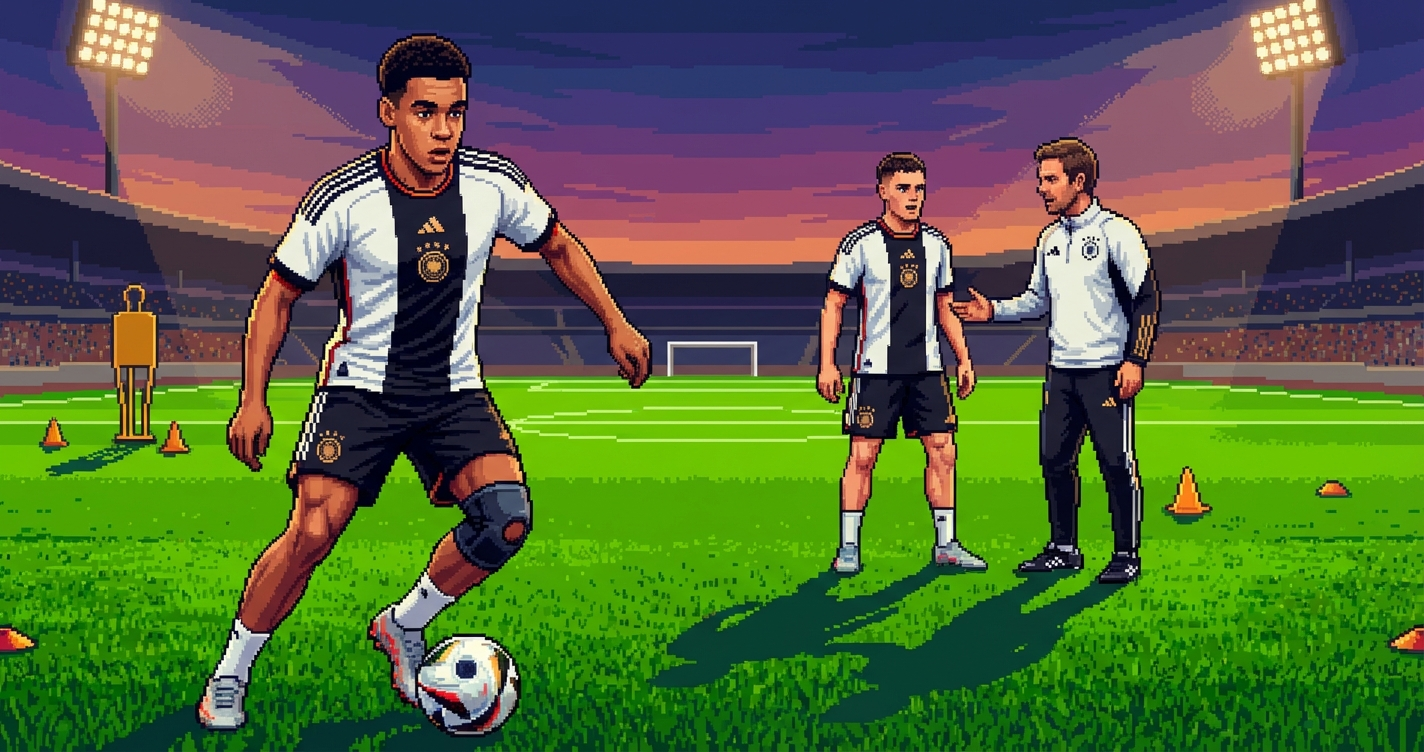
Jamal Musiala's recovery from a broken leg suffered during the FIFA Club World Cup has removed the biggest question mark from Germany's World Cup preparations, allowing head coach Julian Nagelsmann to plan with certainty around the attacking midfield partnership that defines Die Mannschaft's tactical approach. Bundesliga.com confirmed Musiala's status: "Jamal Musiala has recovered well from the broken leg suffered at the FIFA Club World Cup last summer, meaning he should begin in the playmaker role in tandem with Florian Wirtz." That dual playmaker system provides Germany with creative options that few nations can match, combining Musiala's dribbling and goal-scoring with Wirtz's vision and passing range.
Musiala's injury created genuine concern about Germany's attacking potency throughout the winter months. FourFourTwo documented the situation's severity: "With no Jamal Musiala for the foreseeable future, Wirtz has the opportunity to cement himself and Germany's main number 10 ahead of the World Cup." Wirtz performed admirably during Musiala's absence, demonstrating he could carry creative responsibilities independently rather than merely complementing Musiala's brilliance. Yet Germany's ceiling rises significantly with both playmakers available—opponents cannot focus defensive attention solely on one creator when two world-class talents operate in tandem, creating space and opportunities through their combined movement and technical quality.
Nagelsmann has built Germany's tactical identity around youth, speed, and technical superiority in midfield zones. Fox Sports described his approach: "Known for his tactical flexibility and data-driven approach, Nagelsmann was retained after Germany's run to the EURO 2024 semifinals and now leads the team into the 2026 World Cup cycle." That EURO 2024 performance demonstrated progress but also revealed limitations—Germany could dominate possession and create chances yet struggled converting dominance into victories when facing organized opponents willing to defend deep. The Musiala-Wirtz partnership addresses that weakness by providing goal-scoring threat from midfield positions rather than relying solely on strikers to convert chances.
Germany's squad depth in midfield creates selection dilemmas that most nations envy. Sporting News identified the core: "Joshua Kimmich, Jamal Musiala and Florian Wirtz, three midfielders, are set to headline the Germany roster at the 2026 FIFA World Cup." Kimmich provides defensive coverage and ball progression from deeper positions, allowing Musiala and Wirtz freedom to attack without defensive responsibilities that would limit their offensive impact. This three-man midfield combination balances creativity with stability, ensuring Germany controls possession while maintaining defensive shape when transitions favor opponents.
Recent qualifying performances demonstrated Germany's evolution under Nagelsmann despite injury absences. Bundesliga.com reported a crucial qualifier: "Germany: Baumann - Kimmich (c) (Baku 64'), Tah, Schlotterbeck (Thiaw 64'), Raum (Brown 72') - Goretzka, Pavlović (Nmecha 46') - Gnabry, Wirtz (Ouédraogo 77'), Sané - Woltemade Unused subs: Nübel, Dahmen, Anton, Leweling, Burkardt, Adeyemi, Schade Out: Amiri (adductors), El Mala (U21s), Füllkrug (calf), Havertz (knee), Musiala (ankle), Rüdiger (hamstring) Coach: Julian Nagelsmann." That lineup navigated qualification successfully despite missing multiple first-choice players, demonstrating squad depth and tactical flexibility that bodes well for tournament football where injuries and suspensions inevitably disrupt ideal formations.
Germany enters the 2026 World Cup targeting a fifth title that would equal Brazil's record. That ambition requires more than talent—it demands tactical discipline, mental resilience, and the ability to win tight matches against opponents who defend excellently while creating limited chances through counterattacks. Musiala's return provides the attacking firepower necessary to break down defensive blocks. His partnership with Wirtz creates the type of dynamic playmaking that transforms possession dominance into goal-scoring opportunities. Whether Germany can convert that talent into championship success depends on executing Nagelsmann's tactical vision across seven World Cup matches, but Musiala's recovery ensures they approach the tournament with attacking options that position Die Mannschaft among genuine title contenders rather than merely competitive participants.