
Luka Modrić's Final World Cup: Croatia Captain Leads Vatreni Into 2026 Tournament at Age 40
Real Madrid legend defies age as Zlatko Dalić builds squad around ageless playmaker; Croatia targets third consecutive deep World Cup run in Group L.
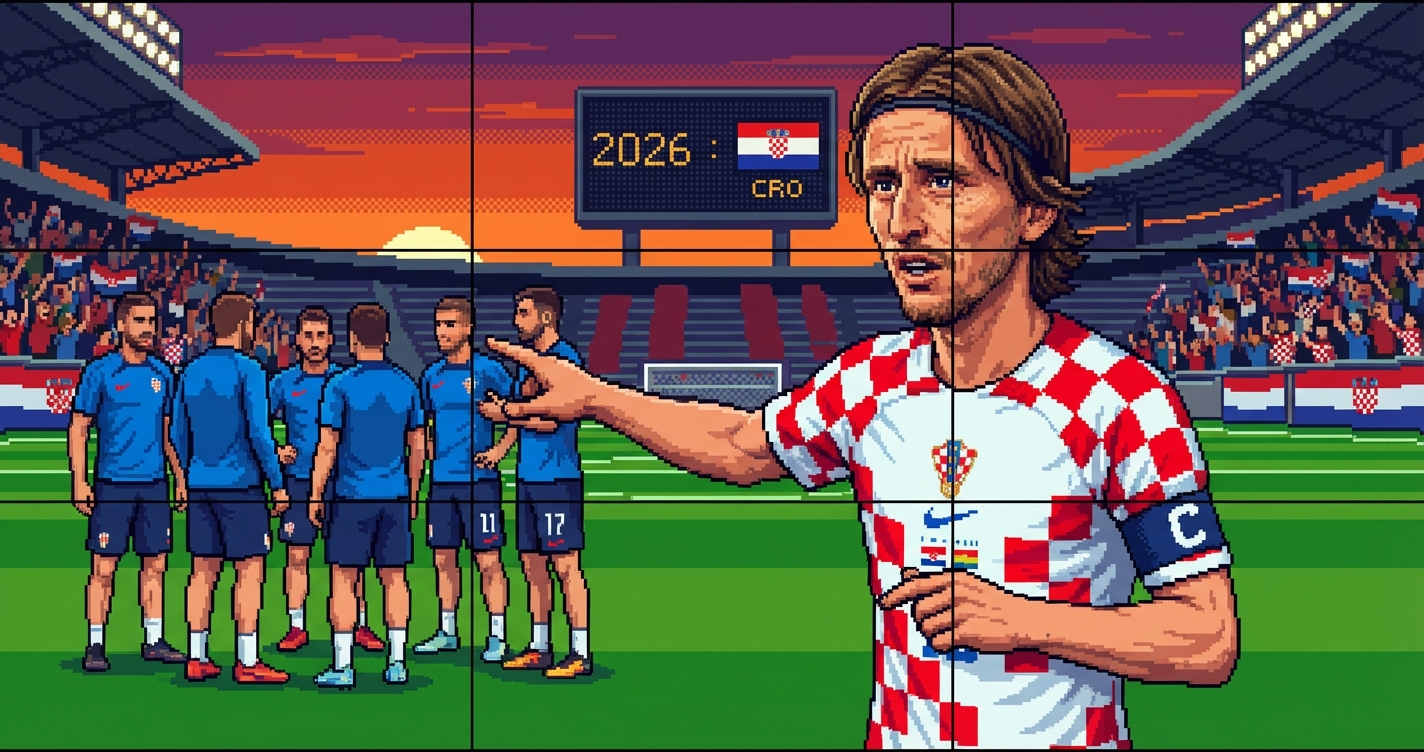
Luka Modrić will captain Croatia at the 2026 FIFA World Cup at age 40, potentially his final appearance on football's biggest stage after a career that has seen him transform from Dinamo Zagreb prospect into one of the sport's greatest midfielders. FourFourTwo documented Croatia's reliance on their legendary captain: "The semi-finalists of 2022, and beaten finalists of 2018, have a squad that expertly blends old and new, with Luka Modric, undoubtedly the country's best ever footballing export, still captaining the side." Modrić's presence provides Croatia with leadership, experience, and tactical intelligence that younger players cannot replicate regardless of physical advantages they possess.
Head coach Zlatko Dalić has built his tactical approach around managing Modrić's playing time while maximizing his impact when he features. Bolavip reported Dalić's recent squad management: "Head coach Zlatko Dalic has decided to rest Modric at the start for tactical reasons, though the AC Milan midfielder is expected to feature." This rotation strategy reflects Dalić's understanding that Modrić cannot endure full 90-minute performances multiple times per week at age 40, yet his quality when fresh remains indispensable for Croatia's World Cup ambitions. The approach requires squad depth that allows Dalić to protect Modrić during qualifiers and friendlies while ensuring he peaks for the tournament's knockout stages.
Croatia's recent World Cup history establishes them as tournament specialists who consistently exceed pre-competition expectations. Reaching the 2018 final as underdogs, then securing third place at Qatar 2022 after another deep run, demonstrated organizational excellence and mental resilience that transforms talent into results. The 2026 squad continues that evolution—experienced players like Modrić, Mateo Kovačić, and Marcelo Brozović anchor midfield alongside younger attacking talent that provides the pace and directness previous generations lacked. This generational blend creates tactical flexibility where Dalić can deploy patient possession football or explosive transitions depending on opposition and match situations.
Footboom captured the optimism surrounding Croatia's 2026 campaign: "Croatia's head coach Zlatko Dalic is brimming with optimism as he envisions Luka Modric leading the national team into the 2026 World Cup." That optimism stems not from blind hope but from demonstrated tournament pedigree. Croatia knows how to navigate World Cup group stages, how to execute knockout round game plans, and how to compete against superior opponents through tactical discipline that compensates for talent disparities. Modrić embodies that mentality—the intelligence to recognize when Croatia should attack, when to control tempo, and when defensive solidity matters more than offensive ambition.
Group L pairs Croatia with England, Panama, and Ghana in a competitive draw where advancement requires defeating at least two opponents or securing draws against both England and Ghana while beating Panama. England enters as favorites with attacking firepower Croatia cannot match man-for-man. Ghana brings African football's physicality and counterattacking threat. Panama represents CONCACAF's organizational discipline. Dalić must craft tactical approaches specific to each opponent while maintaining the defensive foundation that has defined Croatia's World Cup success. Modrić's role becomes orchestrating those game plans from midfield—recognizing when Croatia should press, when to sit deep, when individual moments can decide tight matches.
The 2026 World Cup likely represents Modrić's international farewell—a final opportunity to add to a legacy that includes a Ballon d'Or, five Champions League titles, and World Cup final appearance. For Croatia, his participation provides more than on-field contribution. Young players witness how champions prepare, how winners handle pressure, how legends approach their craft even in football's twilight. That mentorship transcends tactics and technique, creating cultural standards that persist long after Modrić retires. Whether Croatia can produce another deep World Cup run depends on many factors beyond one 40-year-old midfielder, yet Modrić's presence ensures they approach the tournament with belief rooted in experience rather than hope disconnected from reality.
Dalić's challenge involves maximizing Modrić's remaining elite performances while developing successors who can maintain Croatia's tournament competitiveness beyond 2026. The squad features midfield talent capable of assuming larger roles—players who have learned from Modrić's example and now must demonstrate they can execute without his guidance. For now, Croatia benefits from Modrić's continued excellence, trusting their captain to deliver one final World Cup masterclass before international football loses one of its greatest players. Whether that farewell includes another semifinal run or earlier elimination, Modrić's 2026 participation ensures Croatia competes with the organizational quality and tactical intelligence that has defined their remarkable World Cup era.