
James Rodríguez Sets Bold World Cup Goal: 'We Want to Win It' After Copa América Heartbreak
Former Golden Boot winner declares championship ambition; Néstor Lorenzo's Los Cafeteros blend experience and youth for Group K challenge against Portugal.
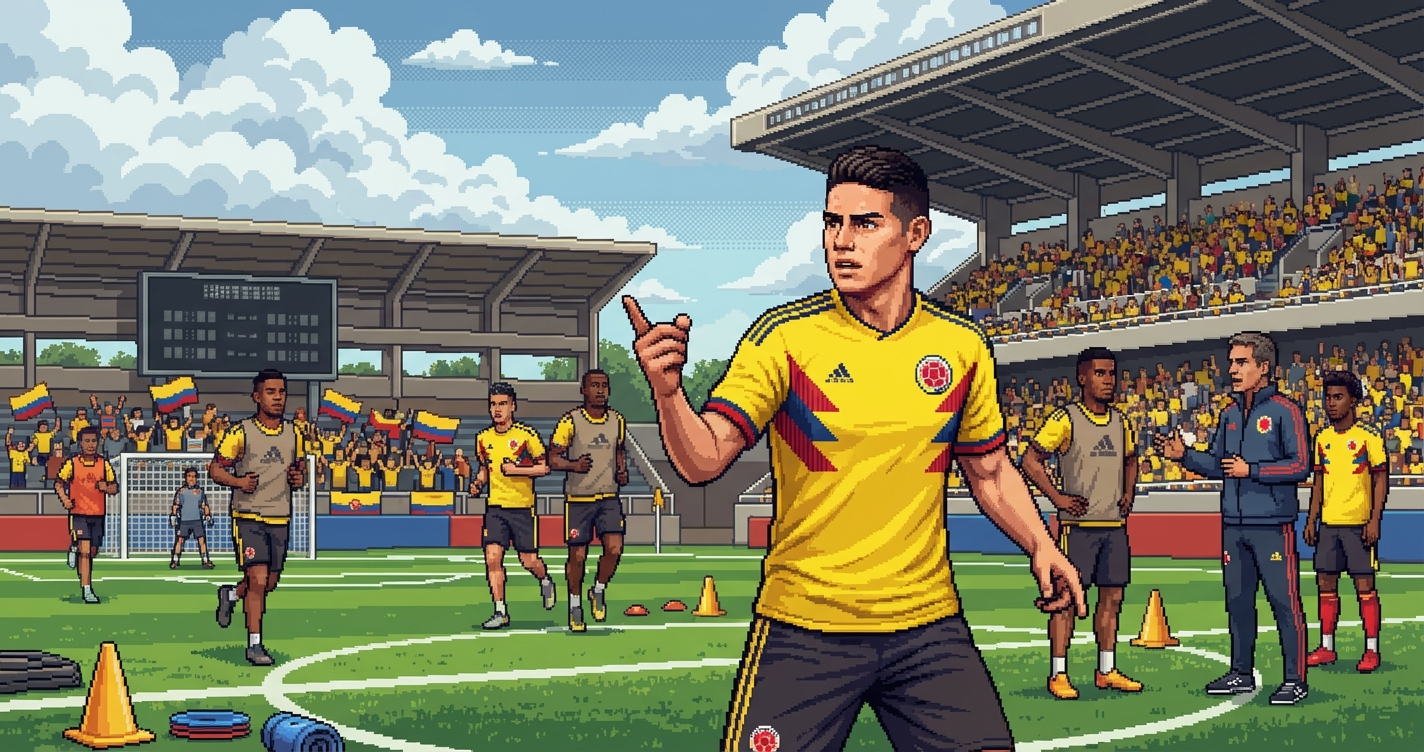
James Rodríguez has declared Colombia's intention to win the 2026 FIFA World Cup, transforming what might have been modest expectations into championship ambition rooted in recent tournament success and squad quality. Colombia One reported Rodríguez's bold statement in December 2025: "With the team we have … we'll stand up to anyone because this is a big team. We're playing for big things. … A World Cup, and we want to win it." That confidence reflects Colombia's evolution under head coach Néstor Lorenzo from Copa América finalists into genuine World Cup contenders who believe talent and tactical organization can overcome traditional South American giants and European powerhouses.
Rodríguez's World Cup ambition carries particular weight given his tournament pedigree. Fox Sports documented his history: "James Rodríguez is one of Colombia's most decorated players, earning 122 caps and representing the national team at the 2014, 2018 and 2022 World Cups. He won the Golden Boot at the 2014 World Cup with six goals and has played in several Copa América tournaments." That 2014 performance established Rodríguez as Colombia's talisman—a playmaker capable of controlling matches through vision, technique, and goal-scoring ability that separated Colombia from merely competitive to genuinely dangerous. The 2026 tournament represents his final World Cup opportunity to add championship silverware to individual accolades.
Colombia's recent Copa América final loss to Argentina serves as motivation rather than discouragement for the squad's World Cup preparations. Rodríguez referenced that painful defeat: "Rodriguez also referenced Colombia's painful loss in the 2024 Copa America final against Argentina, saying it has only sharpened the team's hunger. The 2026 tournament will be Rodriguez's third." Losing a final demonstrates Colombia can compete with South America's best while creating hunger to finish what they started. Lorenzo's squad learned from that experience—understanding how to navigate knockout rounds, how to execute tactical game plans against elite opposition, how to handle pressure moments that decide tight matches. Those lessons now inform World Cup preparation as Colombia targets deeper tournament runs.
Lorenzo has assembled a squad that expertly balances experience with emerging talent. FourFourTwo described the roster composition: "Los Cafeteros were one of four teams from CONMEBOL to qualify with 28 points and will appear at World Cup 2026 with one of the most intriguing squads at the tournament which has a mix of experience and breakthrough talent." That blend creates tactical flexibility—veterans like Rodríguez provide tournament knowledge while younger players offer athleticism and fearlessness that complements calculated approach play. Goal.com identified the likely attacking trident: "At the top of the pitch, Diaz, Rodriguez and Duran all have the quality to win games on their own, so combining them together in a front three is the best way forward for Colombia."
Group K pairs Colombia with Portugal, Uzbekistan, and a playoff qualifier in a competitive draw where Colombia enters as neither clear favorite nor obvious underdog. Portugal brings Cristiano Ronaldo's potentially final World Cup alongside attacking talent that can overwhelm defensive organizations. Uzbekistan makes their tournament debut unburdened by expectation. The playoff winner adds European or intercontinental quality. Lorenzo must navigate these challenges while maintaining the attacking identity that defines Colombian football—high pressing, quick transitions, technical superiority in midfield zones that creates scoring opportunities even against superior opponents.
For Colombia, Rodríguez's championship declaration establishes expectations that pressure can either inspire or burden. His confidence stems not from bravado but from demonstrated tournament competitiveness and squad quality that justifies ambition. Whether Colombia can fulfill those aspirations depends on executing Lorenzo's tactical game plans, avoiding injuries to key players, and producing the individual moments that decide tight World Cup matches. Rodríguez's third and likely final World Cup provides narrative drama—a legendary playmaker seeking the trophy that has eluded him despite individual brilliance. Colombia possesses the talent to make that dream reality; the tournament will determine whether belief translates into the performances required to win football's ultimate prize.